
 Rome
RomeRome's Timeless Treasures Unveiled
Join us for a captivating free walking tour through Rome, where history, art, and culture blend into an unforgettable journey across the Eternal City.
Time
3 Hours
Stops
9 Places
Distance
5.1 km
Colosseum
Begin your exploration at the iconic Colosseum, an ancient amphitheater that stands as a testament to the grandeur of the Roman Empire.
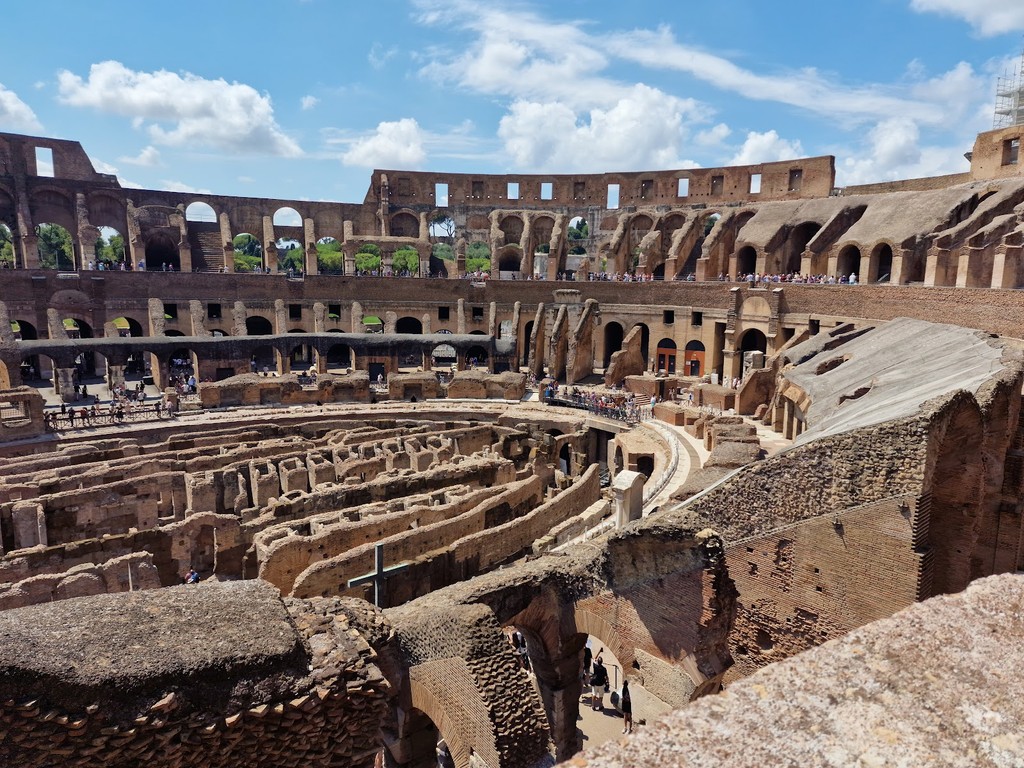
Colosseum (Source: Google Maps)
The Colosseum, an iconic symbol of Rome, was constructed between 70-80 AD under the emperors Vespasian and Titus. This grand amphitheater could hold up to 80,000 spectators who gathered to witness gladiatorial contests, public spectacles, and dramas. Its innovative design features a complex system of vaults and arches, showcasing the engineering prowess of ancient Romans. The Colosseum is not only a remarkable architectural feat but also a poignant reminder of the social dynamics of ancient Rome, where entertainment was a crucial aspect of civic life. Despite suffering damage from earthquakes and stone robbers over the centuries, it remains a UNESCO World Heritage site and one of the most visited monuments in the world.
Palatine Hill
Ascend to Palatine Hill, one of Rome's most ancient parts, offering stunning views of the Roman Forum and Circus Maximus.
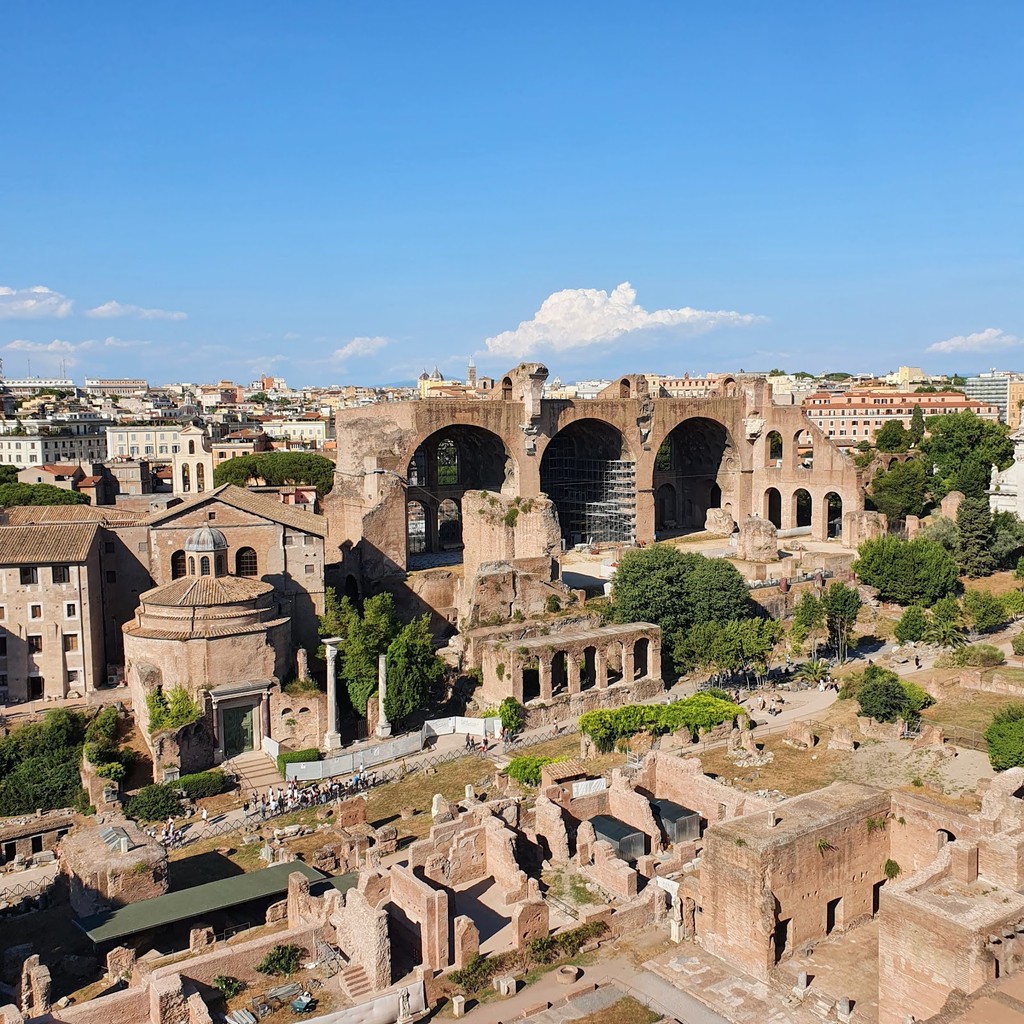
Palatine Hill (Source: Google Maps)
Palatine Hill is one of the seven hills of Rome and is steeped in myth and history. According to Roman mythology, it is the birthplace of Rome, where Romulus founded the city in 753 BC. The hill was home to emperors and aristocrats, with luxurious palaces and gardens that are now in ruins. Archaeological excavations have revealed ancient structures, including the House of Augustus and the Flavian Palace. The hill offers stunning views of the Roman Forum and Circus Maximus, providing a glimpse into the grandeur of ancient Roman life. Palatine Hill is a significant archaeological site, reflecting the evolution of Roman architecture and urban planning over centuries.
Roman Forum
Just a short walk from the Colosseum, the Roman Forum offers a glimpse into the heart of ancient Rome, with ruins that tell stories of political, social, and economic life.
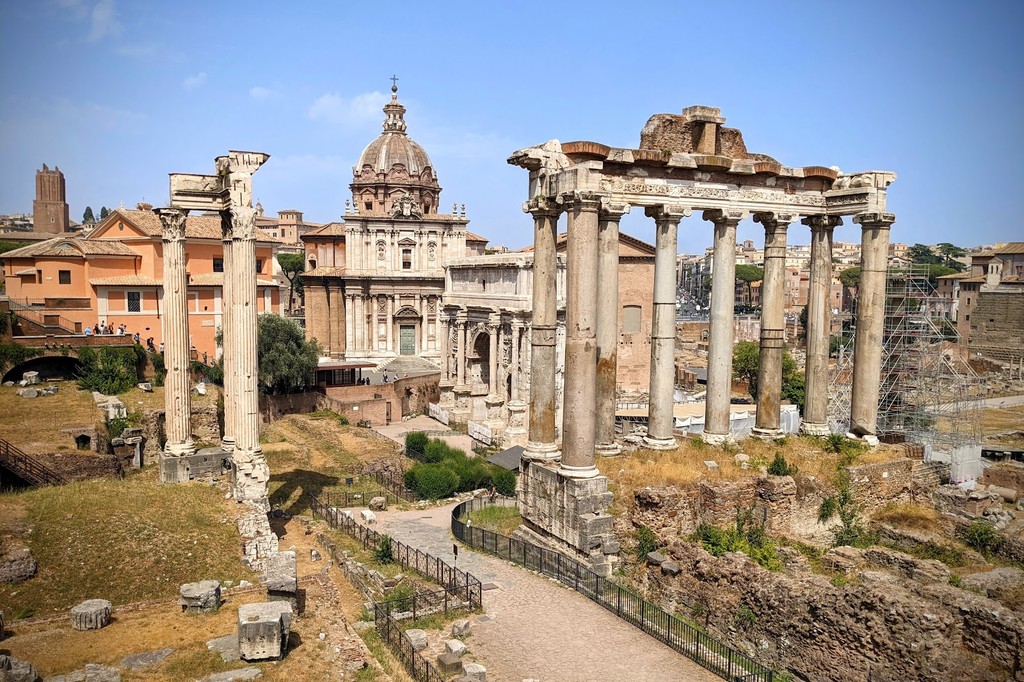
Roman Forum (Source: Google Maps)
The Roman Forum was the heart of ancient Rome, serving as a public space for political, social, and economic activities. It is surrounded by ruins of important government buildings, temples, and marketplaces, showcasing the architectural and cultural achievements of the Roman Empire. Key structures include the Senate House, where the Senate convened, and the Temple of Saturn, dedicated to the god of agriculture. The Forum was a vibrant hub of civic life, hosting speeches, trials, and celebrations. Its decline began with the fall of the Roman Empire, but today, it stands as a testament to Rome's historical significance, drawing visitors to explore its rich legacy.
Piazza Venezia
Continue to Piazza Venezia, a bustling square dominated by the impressive Altare della Patria, a monument dedicated to Victor Emmanuel II.
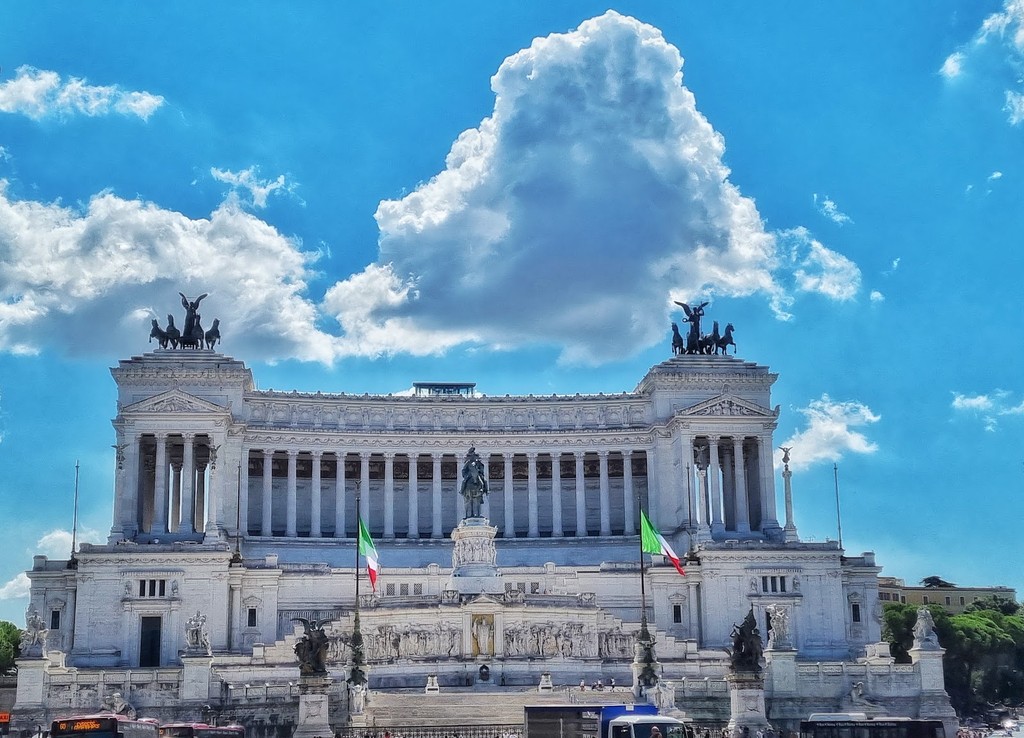
Piazza Venezia (Source: Google Maps)
Piazza Venezia is one of Rome's most famous squares, dominated by the Altare della Patria, a monumental structure dedicated to Victor Emmanuel II, the first king of unified Italy. Built between 1885 and 1935, the monument features a grand staircase, impressive columns, and a statue of the king on horseback. The square serves as a central hub, connecting various important streets and landmarks. It is also a site for national celebrations and parades. The surrounding area showcases a blend of architectural styles, reflecting Rome's historical evolution. Piazza Venezia is not only a bustling square but also a symbol of Italian nationalism and pride.
Trevi Fountain
Stroll to the Trevi Fountain, a Baroque masterpiece where tradition holds that tossing a coin ensures your return to Rome.
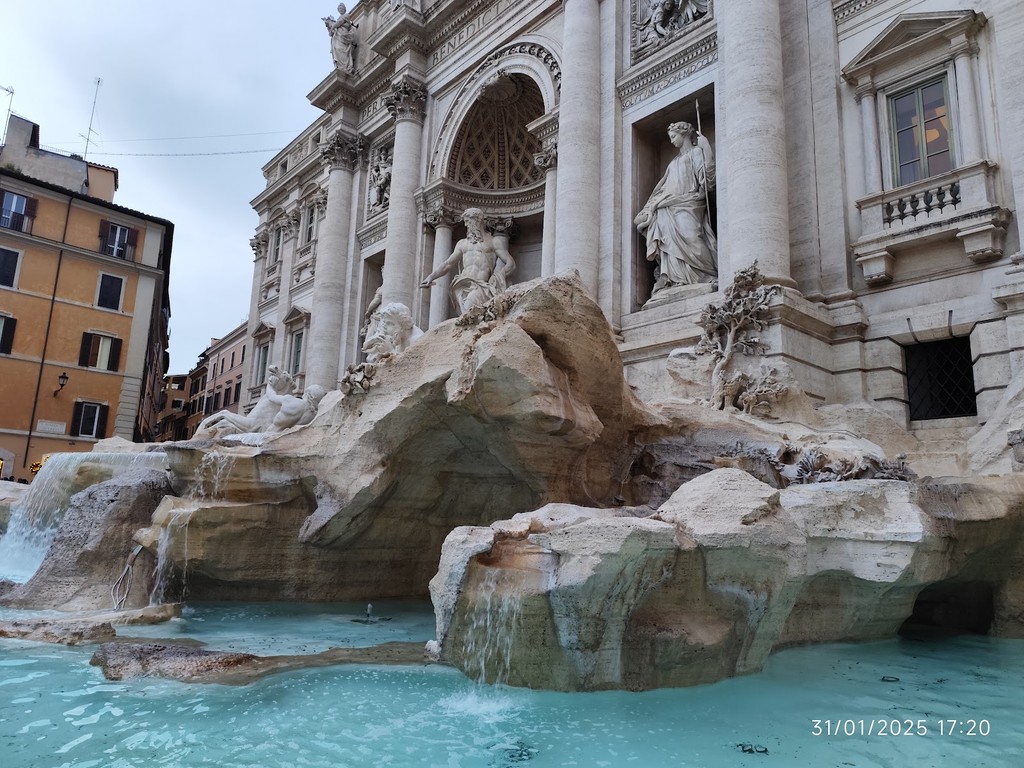
Trevi Fountain (Source: Google Maps)
The Trevi Fountain, completed in 1762, is a Baroque masterpiece and one of Rome's most iconic landmarks. Designed by architect Nicola Salvi, the fountain depicts the sea god Oceanus surrounded by allegorical figures representing abundance and health. The fountain's intricate sculptures and cascading water create a stunning visual spectacle. It is famous for the tradition of tossing a coin over one's shoulder into the fountain, which is said to ensure a return to Rome. The Trevi Fountain is a popular tourist attraction, drawing millions of visitors each year who come to admire its beauty and participate in this cherished ritual.
Pantheon
Head to the Pantheon, an architectural marvel with a majestic dome and a history that spans over two thousand years.
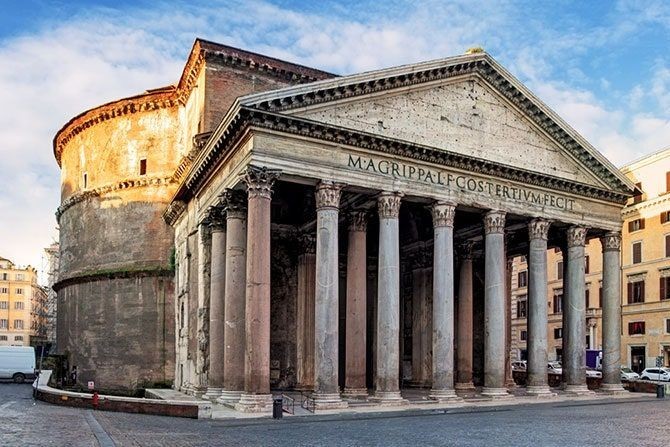
Pantheon (Source: Google Maps)
The Pantheon, originally built as a temple to the Roman gods, is an architectural marvel completed around 126 AD during Emperor Hadrian's reign. Its most striking feature is the massive dome, which remains the largest unreinforced concrete dome in the world, with a central oculus that allows natural light to illuminate the interior. The Pantheon has been in continuous use throughout its history, serving as a church since the 7th century. Its harmonious proportions and innovative design have influenced architecture for centuries. The Pantheon is not only a testament to Roman engineering but also an enduring symbol of the city’s rich cultural heritage.
Piazza Navona
Make your way to Piazza Navona, known for its beautiful fountains, vibrant atmosphere, and as a hub of Roman life.
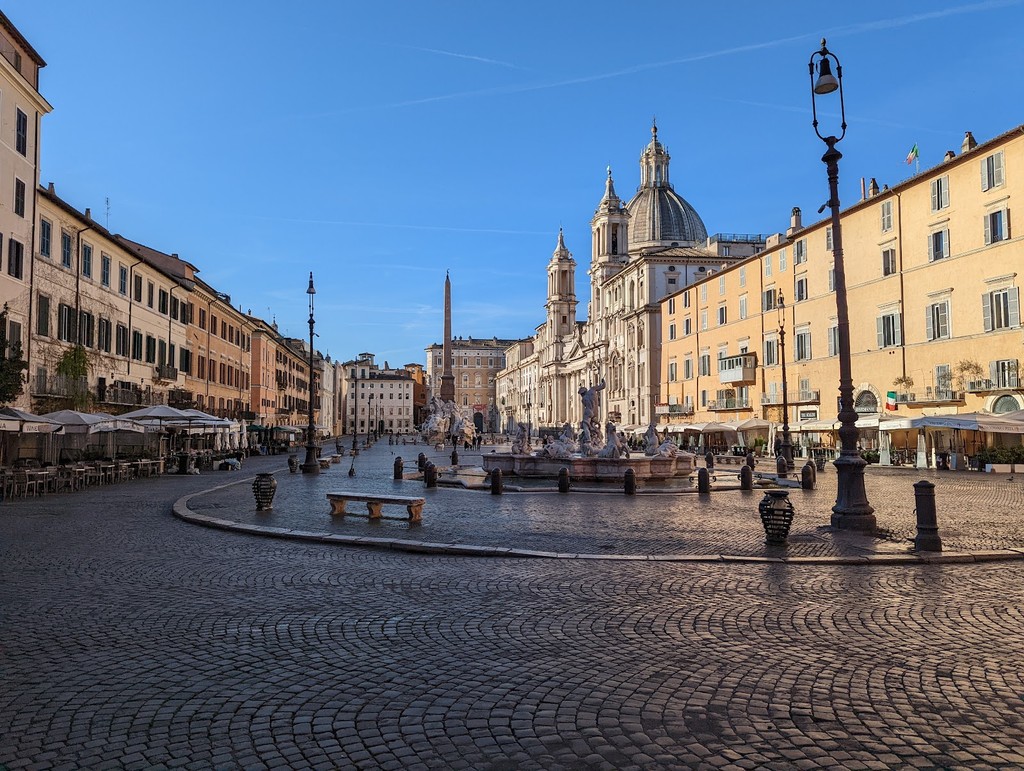
Piazza Navona (Source: Google Maps)
Piazza Navona is a vibrant public square that exemplifies the Baroque style of architecture and urban planning. Built on the site of the ancient Stadium of Domitian, it features three magnificent fountains, with the central Fountain of the Four Rivers designed by Gian Lorenzo Bernini. The square is lined with cafes, restaurants, and beautiful buildings, creating a lively atmosphere. It is a popular gathering place for both locals and tourists, often hosting artists and performers. Piazza Navona has been a center of Roman life for centuries, reflecting the city’s artistic and social vitality.
Campo de' Fiori
Visit Campo de' Fiori, a lively square famous for its daily market and historical significance.
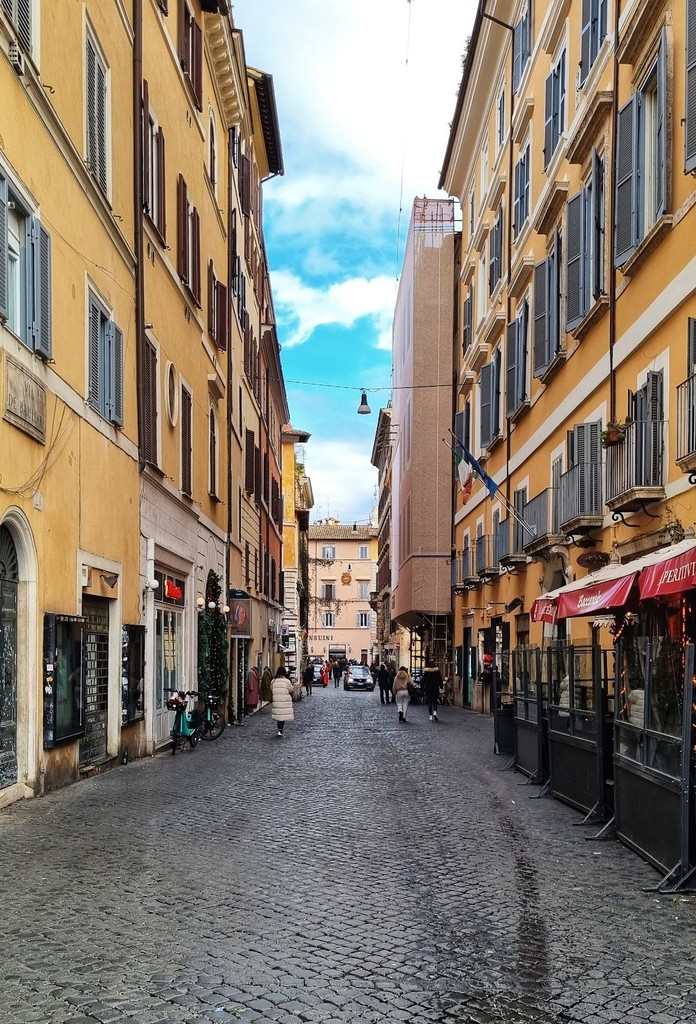
Campo de' Fiori (Source: Google Maps)
Campo de' Fiori is a lively square renowned for its daily market, where vendors sell fresh produce, flowers, and local delicacies. The square has a rich history, dating back to the Middle Ages when it was a site for public executions. Today, it is a vibrant hub of activity, filled with cafes and shops, attracting both locals and tourists. The statue of Giordano Bruno, a philosopher burned at the stake in 1600, stands at the center, symbolizing the square’s historical significance. Campo de' Fiori is a perfect place to experience the local culture and enjoy the lively atmosphere of Rome.
Castel Sant'Angelo
Conclude your tour at Castel Sant'Angelo, a fortress with a rich history that offers breathtaking views of Rome and the Tiber River.
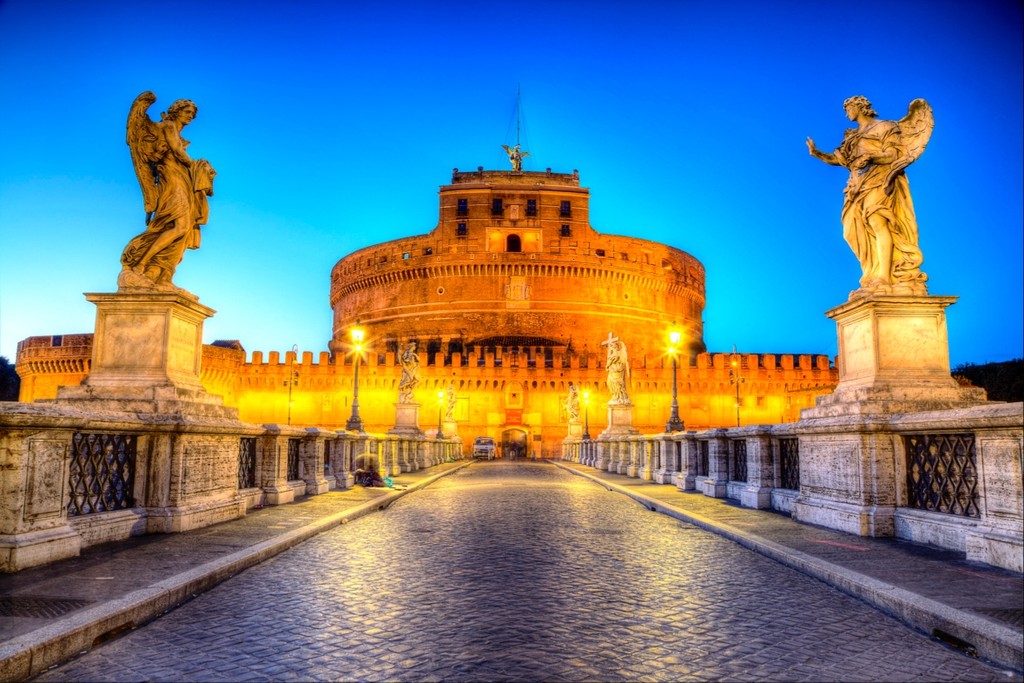
Castel Sant'Angelo (Source: Google Maps)
Castel Sant'Angelo, originally built as a mausoleum for Emperor Hadrian in 139 AD, has served various purposes throughout its history, including a fortress and papal residence. The cylindrical structure is topped with a statue of the Archangel Michael, which gives the castle its name. Its architecture combines elements of Roman and medieval styles, and it is surrounded by a picturesque park along the Tiber River. The castle played a significant role in the defense of Rome and has witnessed many historical events. Today, it houses a museum and offers stunning views of the city, making it a popular destination for visitors.
Your travels, your rules.
Create your own Free Walking Tours.
Set your preferences, distances and anything you want to do or see.
Completely free, no payment required.