
 Rome
RomeAncient Wonders: A Walk Through Time
Join our free walking tour to explore Rome's iconic landmarks, where history, architecture, and culture come alive in every step you take.
Time
3 Hours
Stops
9 Places
Distance
3.7 km
Colosseum
Begin your tour at the iconic Colosseum, an ancient amphitheater that symbolizes the grandeur of Roman architecture and history.
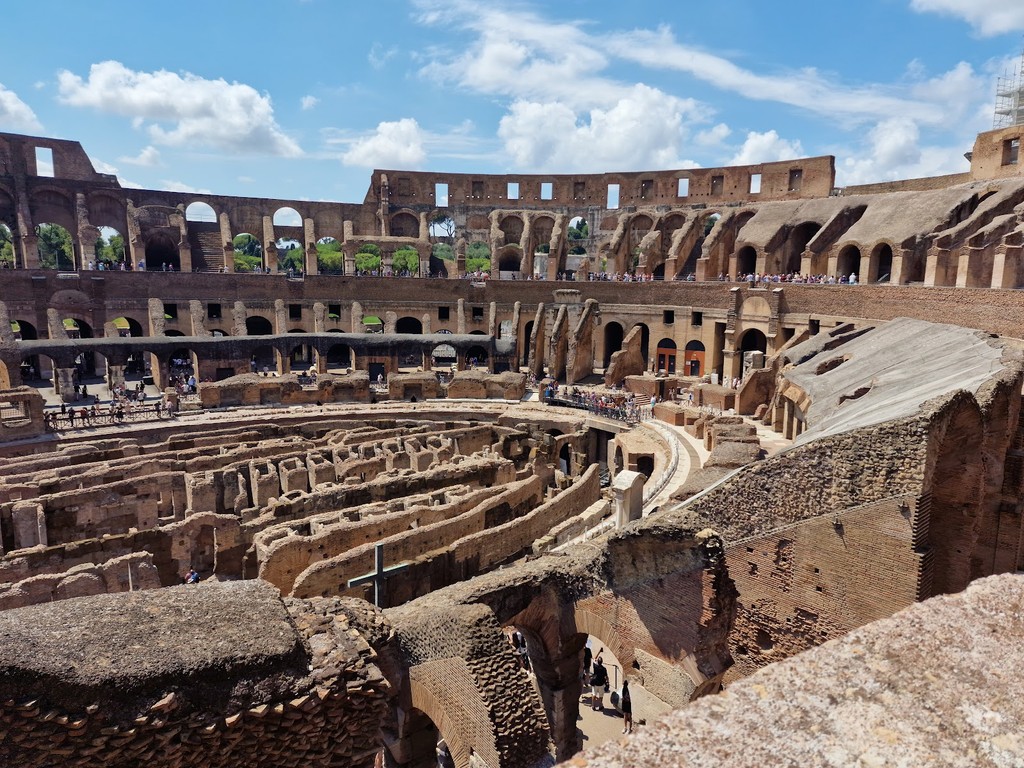
Colosseum (Source: Google Maps)
The Colosseum, also known as the Flavian Amphitheatre, is an iconic symbol of Imperial Rome. Completed in AD 80, this architectural marvel could hold up to 80,000 spectators who gathered to witness gladiatorial contests and public spectacles. The structure showcases the ingenuity of Roman engineering, featuring a complex system of vaults and arches that allowed it to endure for centuries. Its elliptical shape and grand entrances reflect the grandeur of Roman architecture. Today, the Colosseum stands as a testament to the power and brutality of ancient Rome, drawing millions of visitors each year who marvel at its historical significance and architectural beauty.
Arch of Constantine
Just a short walk from the Colosseum, admire the Arch of Constantine, a triumphal arch commemorating Constantine I's victory.
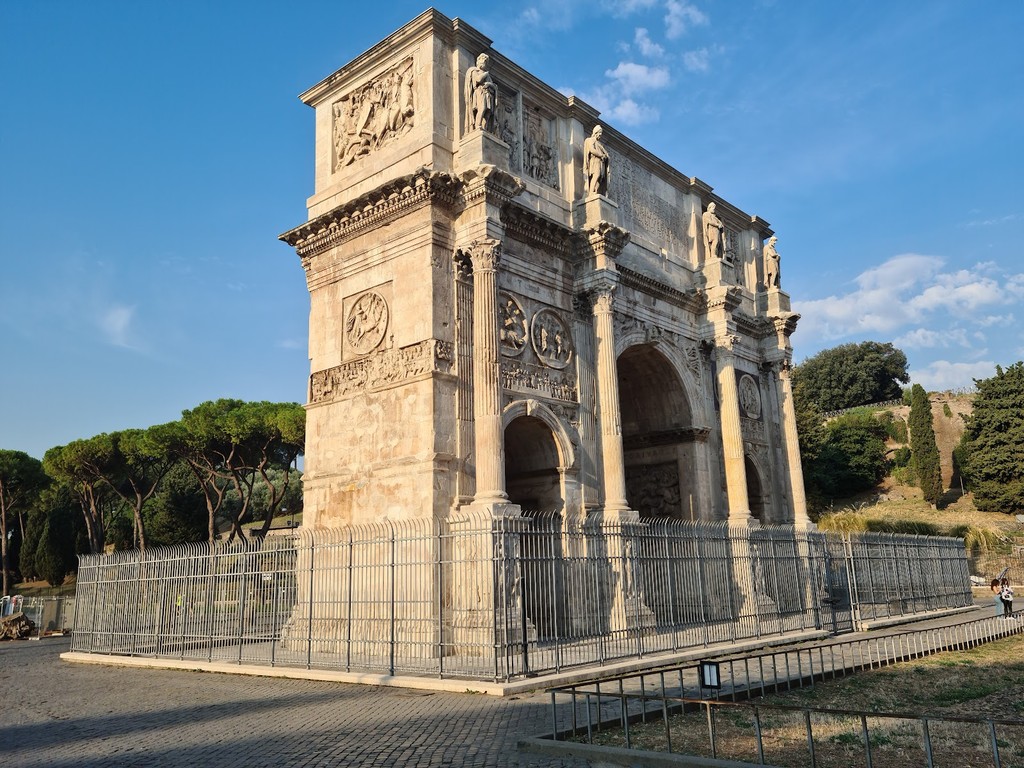
Arch of Constantine (Source: Google Maps)
The Arch of Constantine is a monumental triumphal arch located near the Colosseum, erected in AD 315 to commemorate Emperor Constantine I's victory over Maxentius at the Battle of Milvian Bridge. This arch is notable for its unique combination of architectural styles and its incorporation of spolia, which are reused sculptures and reliefs from earlier monuments. Standing at 21 meters high, it features three archways and is richly decorated with reliefs depicting scenes of Constantine's victories and divine favor. The arch serves as a powerful symbol of the transition from paganism to Christianity in the Roman Empire, marking a pivotal moment in history. It remains one of the most well-preserved examples of Roman monumental architecture.
Roman Forum
Explore the heart of ancient Rome at the Roman Forum, a sprawling complex of ruins that was once the center of Roman public life.
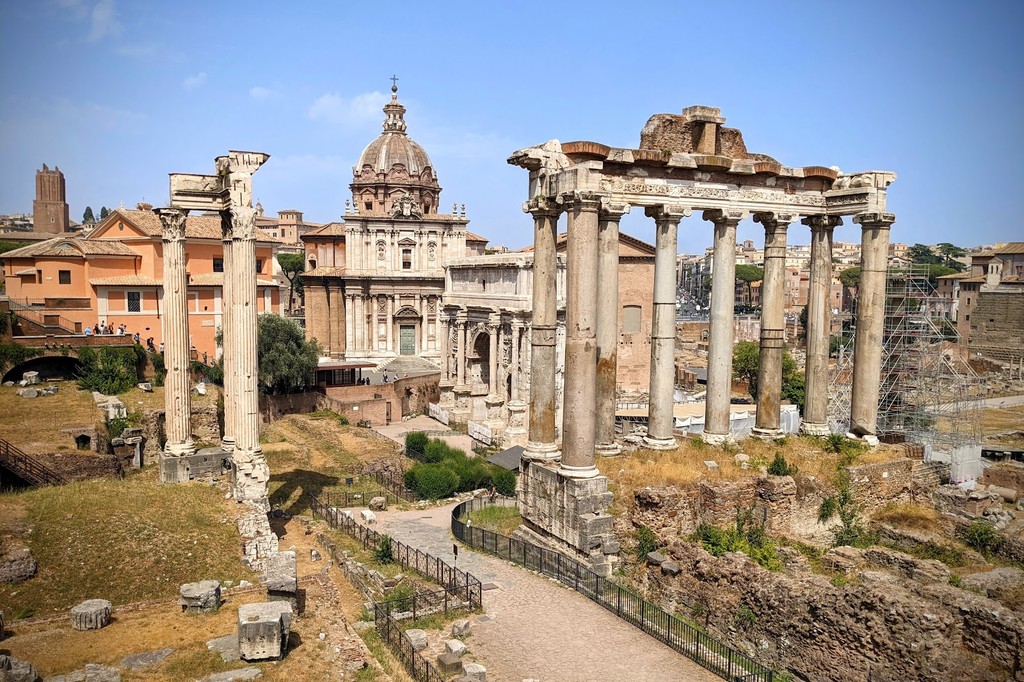
Roman Forum (Source: Google Maps)
The Roman Forum served as the heart of ancient Rome, a bustling center of public life that hosted political, religious, and social activities. Dating back to the 7th century BC, it evolved over time into a complex of ruins that includes temples, basilicas, and public spaces. The Forum was the site of important historical events, including speeches by political leaders and trials. Key structures within the Forum include the Temple of Saturn, the Rostra, and the Curia, each reflecting the architectural styles and cultural values of their time. Today, visitors can wander through the remains of this once-thriving hub, gaining insight into the daily lives of ancient Romans and the evolution of their society.
Capitoline Hill
Head to Capitoline Hill, one of the Seven Hills of Rome, offering stunning views and rich historical significance.
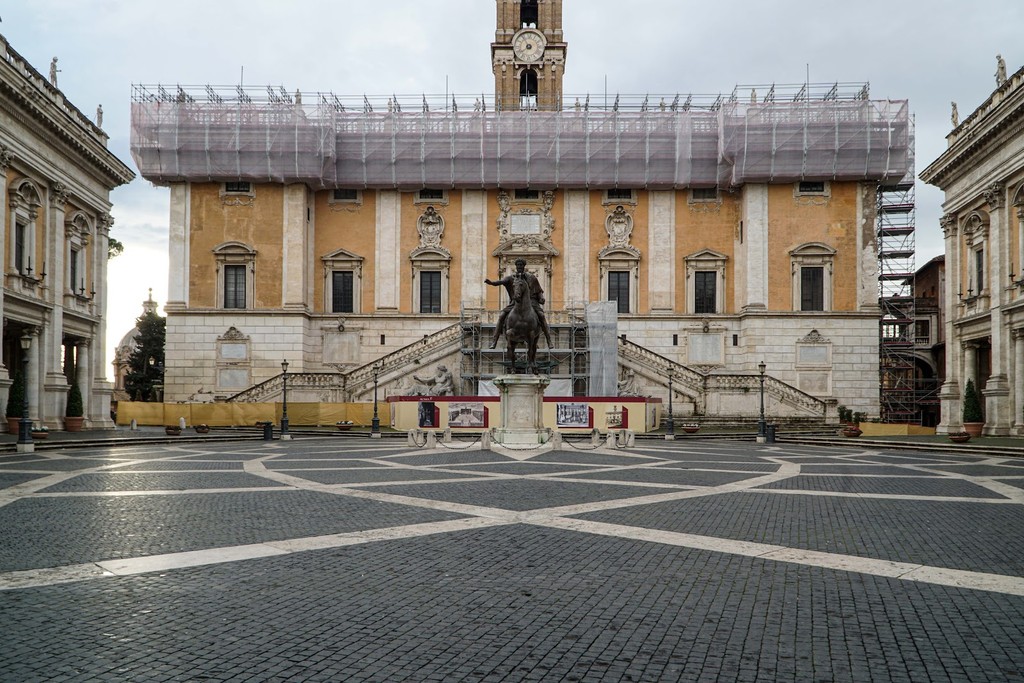
Capitoline Hill (Source: Google Maps)
Capitoline Hill, one of the Seven Hills of Rome, holds great historical and cultural significance as the site of ancient temples and the seat of Roman government. It is home to the Capitoline Museums, which house a vast collection of art and artifacts. The hill's iconic Piazza del Campidoglio, designed by Michelangelo in the 16th century, features a trapezoidal layout and a stunning view of the Roman Forum. The equestrian statue of Marcus Aurelius stands proudly at its center, symbolizing wisdom and leadership. The hill has been a focal point of Roman history for centuries, serving as a symbol of the city’s power and prestige. Today, it remains a popular destination for visitors seeking to explore Rome's rich heritage.
Piazza Venezia
Continue to Piazza Venezia, a bustling square known for the impressive Altare della Patria, a monument dedicated to Victor Emmanuel II.
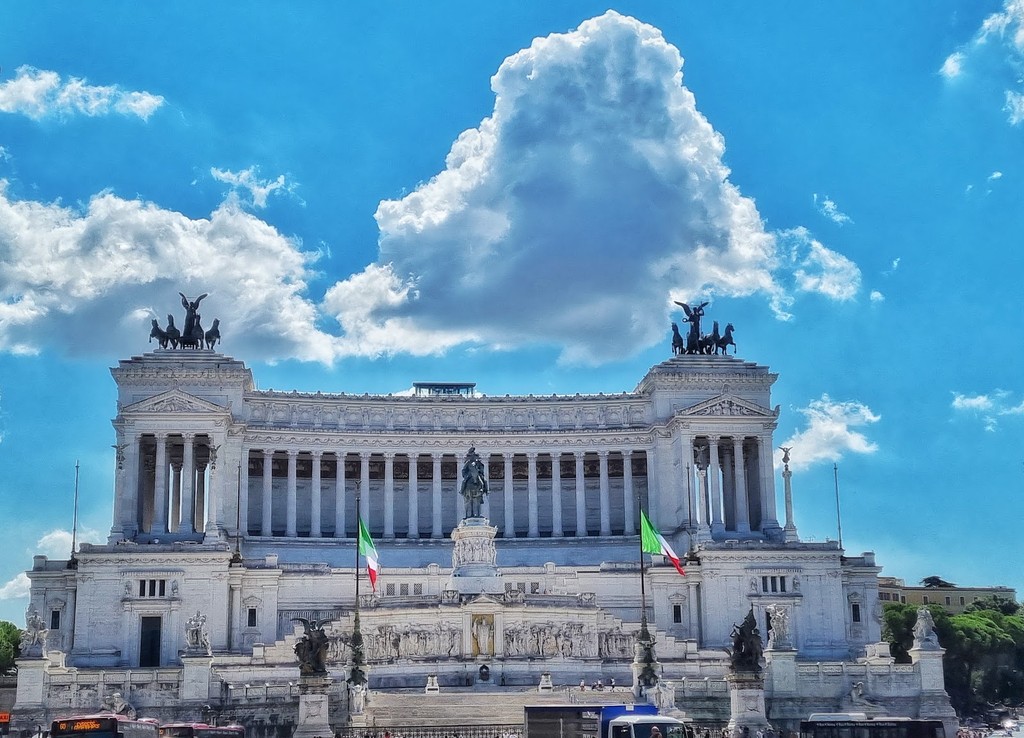
Piazza Venezia (Source: Google Maps)
Piazza Venezia is a bustling square in the heart of Rome, dominated by the imposing Altare della Patria, also known as the Monument to Victor Emmanuel II. Completed in 1935, this monument honors the first king of unified Italy and features a grand staircase, numerous columns, and an impressive statue of the king on horseback. The square is a vital traffic hub and a popular meeting point for locals and tourists alike. Surrounding the piazza are several important buildings, including the Palazzo Venezia, which once served as the residence of the Venetian ambassador. The area is rich in history and architecture, making it an essential stop for anyone exploring Rome.
Trevi Fountain
Take a short walk to the Trevi Fountain, where you can toss a coin and make a wish at one of Rome's most famous fountains.
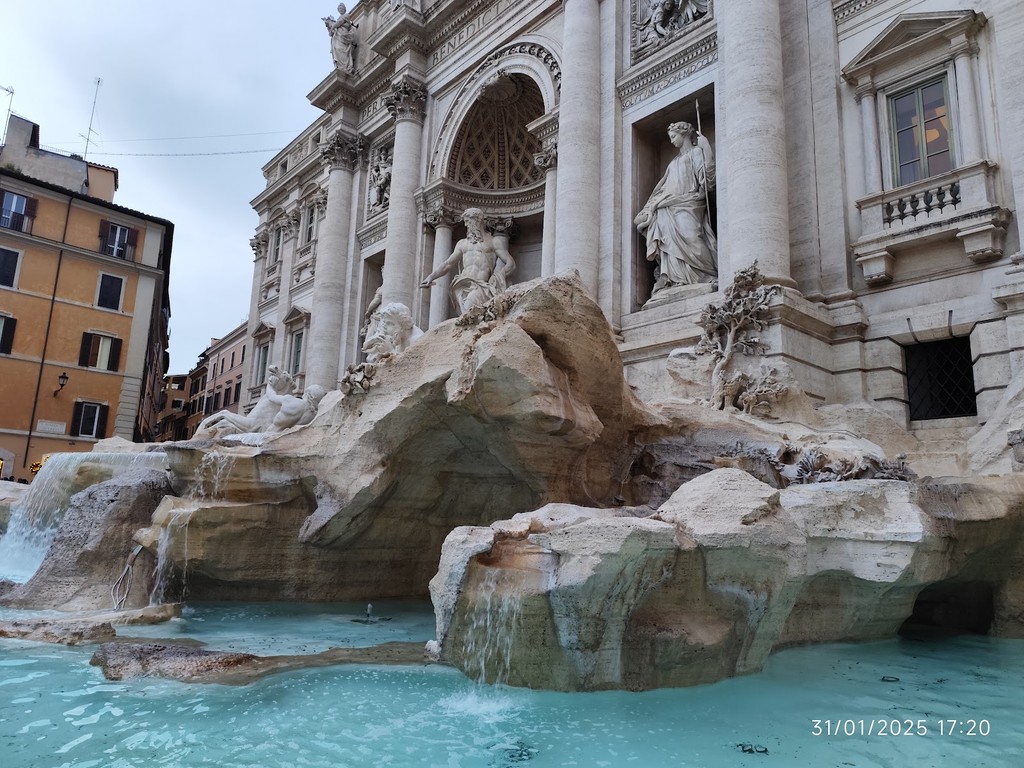
Trevi Fountain (Source: Google Maps)
The Trevi Fountain is one of Rome's most famous landmarks, celebrated for its stunning Baroque architecture and intricate sculptures. Completed in 1762, it was designed by Nicola Salvi and features a central figure of Oceanus, flanked by tritons and horses. The fountain is renowned for the tradition of tossing a coin over one's shoulder into its waters, ensuring a return visit to Rome. This enchanting site attracts millions of visitors each year, who come to admire its beauty and partake in the ritual. The fountain's dramatic lighting at night enhances its splendor, making it a romantic spot in the city. The Trevi Fountain embodies the artistry and cultural heritage of Rome, serving as a symbol of hope and good fortune.
Pantheon
Discover the Pantheon, a marvel of ancient engineering, known for its massive dome and oculus.
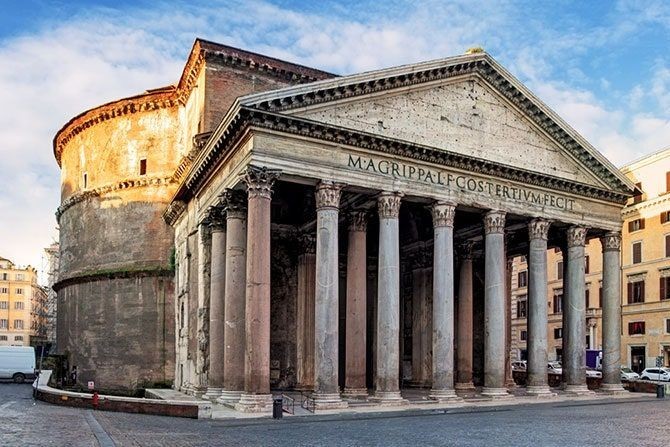
Pantheon (Source: Google Maps)
The Pantheon is a remarkable temple dedicated to the gods of Ancient Rome, renowned for its impressive architectural design and engineering prowess. Built around 126 AD, it features a massive domed roof with a central oculus that allows natural light to illuminate the interior. The Pantheon's portico, with its grand columns and triangular pediment, is a stunning example of classical architecture. It has been in continuous use throughout its history, serving various religious purposes, and is now a church. The building's harmonious proportions and innovative construction techniques have influenced architecture for centuries, making it a must-visit site for those interested in history and design. Today, the Pantheon stands as a testament to the ingenuity of Roman builders and their enduring legacy.
Piazza Navona
Conclude your tour at Piazza Navona, a lively square with beautiful fountains and a vibrant atmosphere.
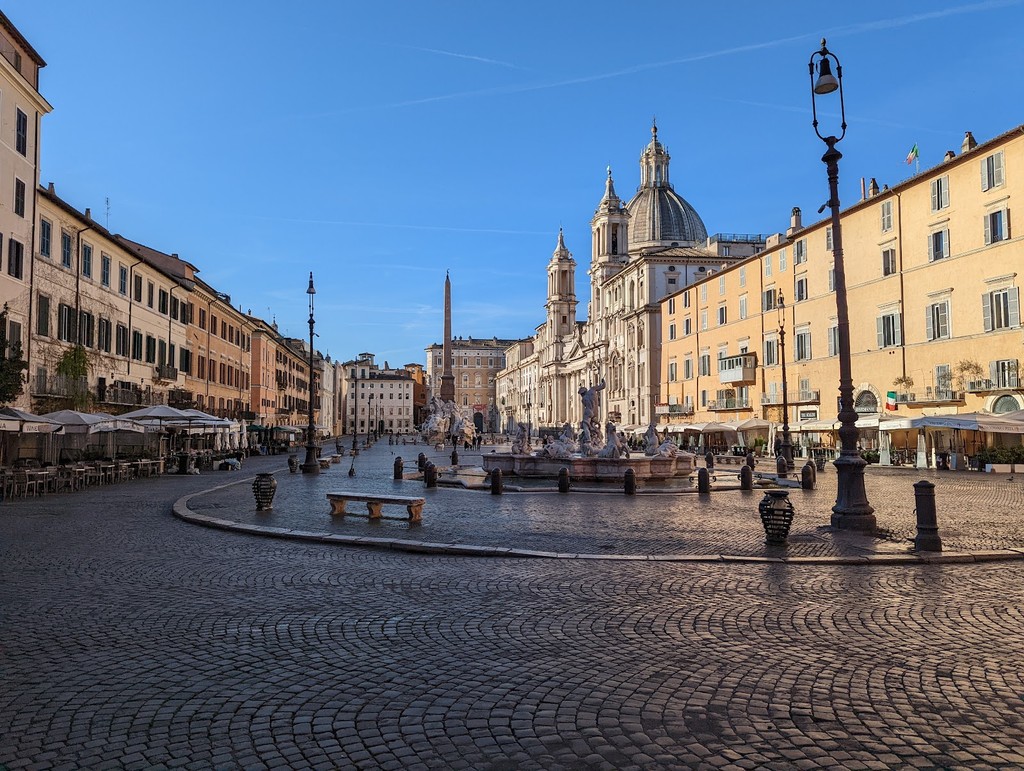
Piazza Navona (Source: Google Maps)
Piazza Navona is a vibrant public square that showcases the Baroque style and is known for its beautiful fountains and lively atmosphere. Originally built on the site of the Stadium of Domitian, it features three stunning fountains, including the famous Fountain of the Four Rivers by Gian Lorenzo Bernini, which symbolizes the four major rivers of the four continents. The square is surrounded by charming cafes, restaurants, and historic buildings, making it a popular gathering place for locals and tourists. Its lively ambiance is enhanced by street performers and artists, adding to the cultural richness of the area. Piazza Navona is a testament to Rome's artistic heritage and serves as a beautiful backdrop for leisurely exploration.
Osteria del Pegno
Finish your walk with a delightful meal at Osteria del Pegno, a cozy restaurant offering authentic Roman cuisine near Piazza Navona.
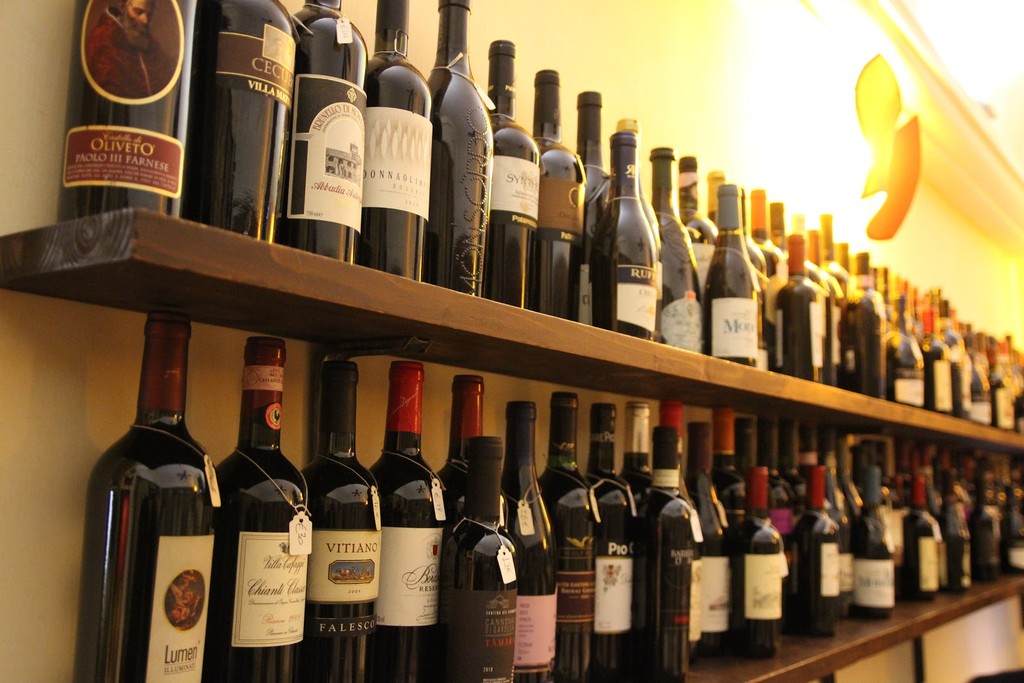
Osteria del Pegno (Source: Google Maps)

Your travels, your rules.
Create your own Free Walking Tours.
Set your preferences, distances and anything you want to do or see.
Completely free, no payment required.